If you’re in the market for a new water heater, you might be wondering whether to buy one from a home improvement store or go for a professional-grade model from a plumbing supplier. While both types look pretty similar from the outside, the differences in build quality and durability are surprising. So, we decided to put these two head-to-head. We purchased two AO Smith water heaters—one from a professional plumbing supply store and another from a big-box retailer—and then took them apart to examine every single component. Finally, we stress-tested them to see which one held up better under pressure.
Below, we’ll share everything we discovered, from the differences in materials to how these water heaters handle extreme pressure. By the end, you’ll have a clear idea of which one might be the right choice for your home.
Understanding Different Water Heater Types
Navigating the world of water heaters starts with knowing the main difference between storage tanks and tankless models.
- Storage tank water heaters are the most common type. They heat water and keep it in an insulated tank until you need it. You can find them in electric, natural gas, and propane options. Each type has different levels of energy efficiency and costs.
- Tankless water heaters, also called on-demand water heaters, work differently. They do not store hot water. Instead, they heat water directly as it flows through the unit. This means you get hot water whenever you need it.
Practical Tips for Selecting the Right Water Heater
Picking the best water heater for your home needs you to think about what your household actually requires. Look at things like how many people live in your home, how much hot water you use every day, and any future changes that might affect your hot water needs. This could include adding new appliances or having more family members.
Also, keep your budget in mind. Check the initial costs and compare them to what you will pay over time for energy, maintenance, and repairs. Getting advice from reliable plumbers or contractors can help you find the right option for your specific needs.
Assessing Household Needs and Water Usage
It’s important to understand how much hot water your household needs. This step helps you choose a water heater that fits your needs without wasting energy or running out of hot water. Start by looking at your daily routines and how you use hot water.
Think about how many showers you take each day, how often you wash clothes or dishes, and any other tasks that need hot water. For example, a family of four will usually need a lot more hot water than a single person or a couple.
After you know your hot water usage, you can find the right size and type of water heater. If you’re looking at tank-style water heaters, remember that their capacity is shown in gallons of water. A bigger tank gives you more hot water available when you need it.
Questions to Ask Before Making a Purchase
Before you buy a new water heater, ask the right questions. This helps you find a unit that fits your needs. Check on the warranty details and what it covers. Also, find out the unit’s expected lifespan when used normally.
It’s important to know the energy efficiency rating shown as the Energy Factor (EF). A higher EF means better efficiency and lower utility bills. For tankless water heaters, ask about the flow rate in gallons per minute (GPM). This tells you how much hot water the unit can make at one time.
By asking the right questions, you will understand the water heater better. This will help you make a good and informed decision.
Big Box Store vs. Professional-Grade Water Heaters: Are They Really Different?
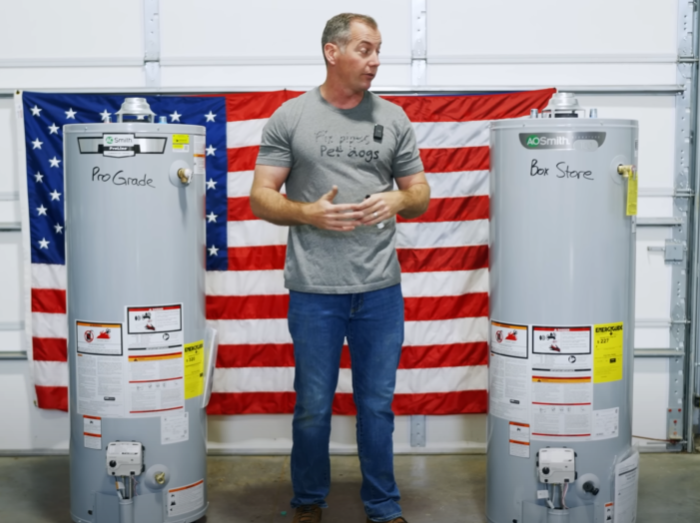
Despite similar appearances, water heaters from a box store and those from a professional supplier often differ significantly in quality. Many brands, including AO Smith, Rheem, and Bradford White, make both versions. The professional-grade models cost a bit more, but are they worth it? We dug in to find out.
2. Our Approach: Side-by-Side Breakdown of Each Water Heater
To get a fair comparison, we bought identical models—one from a box store and one from a professional supply store. Here’s how we analyzed them:
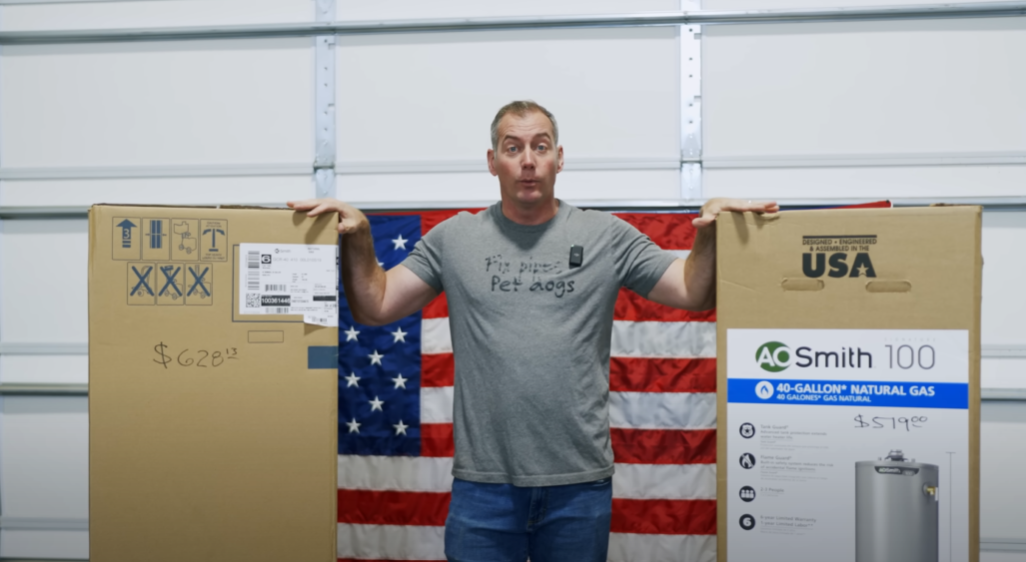
- Weighing the Units: We first weighed each water heater in its box to see if there was a weight difference right off the bat. The pro-grade model immediately weighed about 5 pounds more.
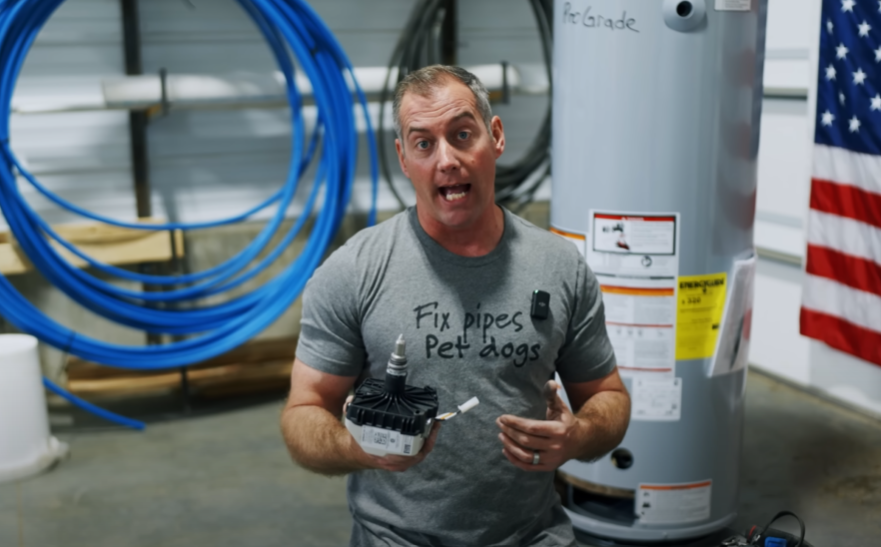
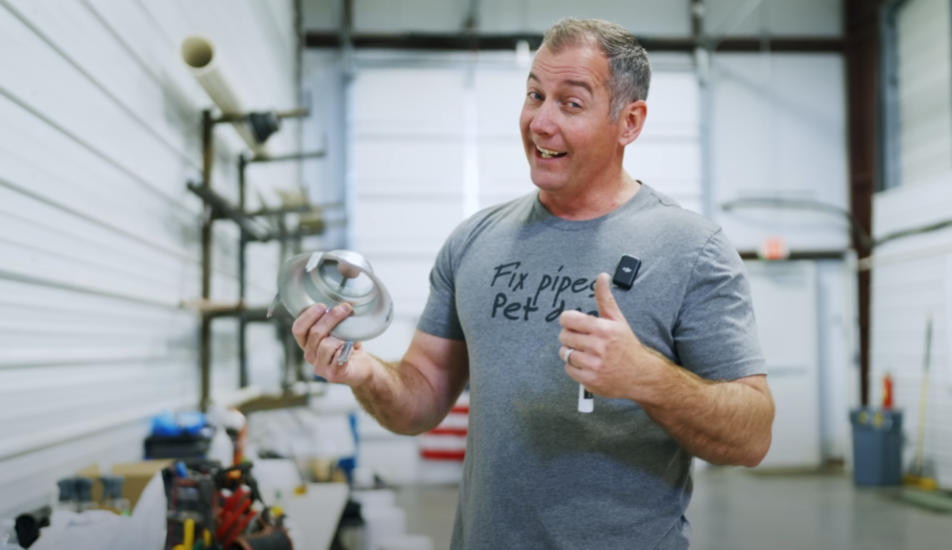
- Detailed Disassembly: We took each water heater apart piece by piece. This helped us compare and even weigh individual parts like the drain valve, flue baffle, and anode rod.
- Extreme Pressure Testing: Lastly, we connected the water heaters to a pressurized system and slowly increased the pressure to test their durability.
3. Component-by-Component Comparison
Taking apart these water heaters revealed a lot about their quality and build. Here are some of the main differences we found:
a) Drain Valve
- Professional-Grade: The pro-grade unit uses a brass drain valve, which is built to last and withstand higher temperatures.
- Box Store: In the box store model, the drain valve was plastic. Plastic parts are more likely to crack over time and are tougher to service.
b) Temperature and Pressure Relief Valve (TP Valve)
- Professional-Grade: This model had a larger, stronger TP valve made with thicker brass—important for handling pressure safely over time.
- Box Store: The TP valve on the box store model was smaller and seemed less durable, which could mean it’s more likely to wear out.
c) Anode Rod
- Professional-Grade: The professional model came with a magnesium anode rod, which offers stronger protection against corrosion.
- Box Store: The box store model used an aluminum anode rod. Aluminum works but doesn’t protect against rust as well as magnesium.
d) Flue Baffle
- Professional-Grade: The pro-grade unit had a longer flue baffle with more twists, which helps it retain heat better and improves efficiency.
- Box Store: The box store baffle was shorter and simpler, meaning it doesn’t hold heat quite as well, making the heater less efficient overall.
e) Water Inlet and Outlet Nipples
- Professional-Grade: This model had thicker, more durable metal nipples (the pipe connections at the top of the heater), with better threading.
- Box Store: The nipples on the box store model were thinner and seemed more likely to corrode or leak over time.
Almost every component on the professional-grade model was heavier and sturdier, which points to a better-quality build.
The Weight Test: Does It Matter?
Once we stripped everything down to the bare tank, we weighed each heater. The professional-grade tank was still about 9 pounds heavier than the box store model. This may not sound like much, but for a piece of equipment mostly made of metal and insulation, it’s a big difference. Those 9 pounds mean the pro-grade model likely uses thicker steel, which helps it last longer and resist leaks.
Easier to Maintain and Built to Last Longer
One thing we know from experience is that some water heaters are simply easier to maintain. The professional-grade units are built with parts you can replace and access easily, like the brass drain valve we mentioned. This means they’re less likely to develop issues over time. Plastic parts, like the ones found on the box store model, are more prone to breaking and can make servicing a hassle.
Extreme Pressure Testing: Which One Holds Up?
We wanted to know how each water heater would perform under intense pressure. So, after taking each apart, we hooked both units up to a high-pressure water line and slowly turned up the pressure. Here’s how they fared:
Box Store Heater:
- The box store heater started to swell visibly as the pressure climbed. Its thin walls couldn’t handle the strain, and after some time, it began to leak water from the top.
- This slow, steady failure showed us the limitations of its construction.
Professional-Grade Heater:
- The professional-grade model held its shape and integrity for much longer, despite the extreme pressure. While it eventually failed, it took much more pressure to reach that point.
- The thicker steel and better welds allowed it to handle much higher pressure without deforming.
For households with high water pressure or heavy water use, the professional-grade water heater is better equipped to handle the daily stresses of heating and cooling cycles without wearing out as quickly.
Cost-Effectiveness: Is the Professional-Grade Heater Worth the Extra Money?
Yes, the pro-grade heater costs a bit more upfront—usually $100–$200 more than the box store model. But considering it’s built to last longer and with fewer repairs, the initial cost may be worth it over time. The thicker tank, higher-quality parts, and better efficiency mean you’ll likely save on maintenance, and it could even outlast the warranty.
Key Points to Consider:
- Longer Lifespan: Professional-grade heaters often last twice as long, sometimes reaching 12–15 years, while box store models may need replacement at around 6–8 years.
- Fewer Repairs: Since the parts are better quality, you’re less likely to need frequent repairs.
- Energy Savings: The better construction of the pro-grade model means it holds heat better, which can save you money on utility bills.
When a Box Store Heater Might Be the Right Choice
Despite its limitations, there are times when a box store water heater makes sense:
- If You’re on a Tight Budget: Sometimes, you just need a working heater right away without the extra cost. A box store unit can get the job done at a lower price.
- For Low-Usage Spaces: If the heater is for a place you don’t use often, like a vacation cabin, the box store option might be enough.
- For Short-Term Needs: If you know you’re moving within a few years, a box store model could make more sense for the short term.
Final Thoughts: Which Heater is Right for You?
From everything we found, the differences between box stores and professional-grade water heaters are real and significant. If you want a reliable, durable water heater that’ll last, a professional-grade model is usually worth the investment. Its higher-quality components, sturdier construction, and longer lifespan make it a better choice for most homeowners. However, if you’re on a budget or only need a heater for short-term use, a box store unit can still do the job—it just may not last as long.
Still not sure? If you’re torn, a plumber can help you weigh the pros and cons of your specific needs. Having the right water heater for your home can save you from unexpected repairs and make sure you’re getting hot water reliably, year after year.
Smedley Plumbing’s Water Heater Services
At Smedley Plumbing, we specialize in professional water heater installation, replacement, and repair. Here’s how we can help:
- Installation: We expertly install all types of water heaters, ensuring they’re set up correctly for optimal efficiency and performance.
- Replacement: When it’s time for a new water heater, we remove the old unit, help you choose the right replacement, and handle the full installation process.
- Repair: From leaks to inconsistent temperatures, our skilled team quickly diagnoses and repairs water heater issues, often in a single visit.
Why Choose Smedley Plumbing?
- Expertise: We’re experienced with high-quality, professional-grade water heaters.
- Transparency: Expect honest pricing and clear communication.
- Reliable Service: Our team works efficiently to minimize downtime so you can enjoy reliable hot water.
Need Hot Water Fast?
Get reliable water heater repair, replacement, or installation with us! Contact Smedley Plumbing today to schedule your service and enjoy consistent hot water again