House size, hot water demands, and lifestyle routine are just a few things to consider when selecting a new water heater for your home. Choosing the right option isn’t just about keeping your showers hot, it’s also about long-term efficiency and energy cost savings.
But how do you figure out which water heater replacement to opt for when the market is flooded with tons of options?
Don’t fret! This guide will help you choose the right unit for your needs, considering everything from your local climate, water quality, and running costs to size to energy efficiency – and more!
Understanding Different Water Heater Types
Storage Tank Water Heaters
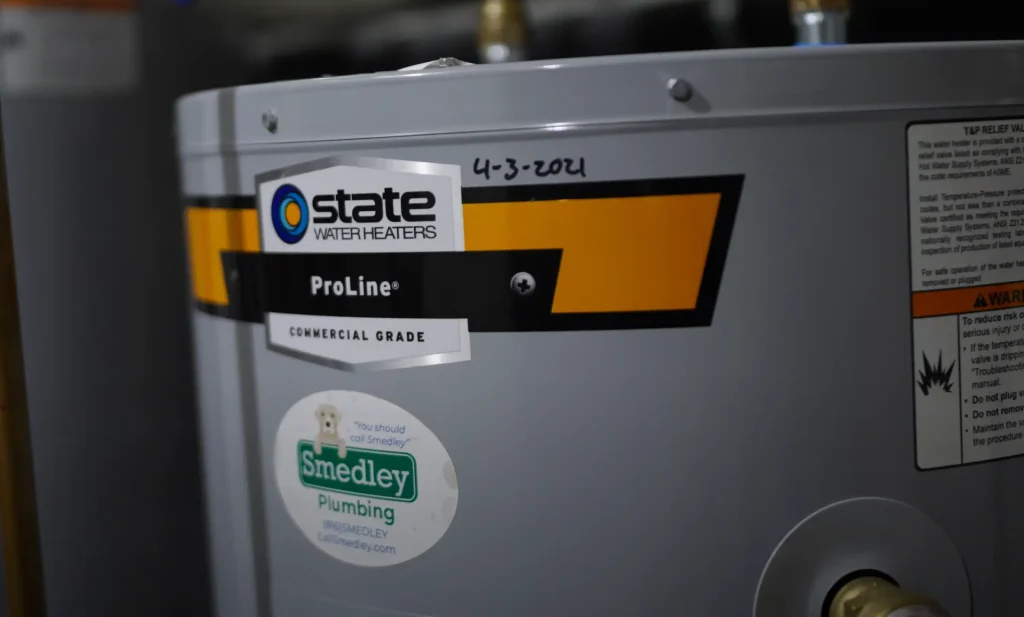
These traditional water heater tank models constantly heat a tank of water, hence the name. They’re a good choice for most homes with a moderate hot water demand.
Tank heaters are generally easier to install than tankless water heaters, making their installation cost cheaper, too.
Tankless Water Heaters
Tankless water heaters, also called instantaneous water heaters, are highly energy-efficient models that supply heating and hot water directly from the mains water supply. This eliminates the need for a separate water storage tank.
These space-saving water heaters are ideal for smaller homes or those wanting an unlimited hot water supply (and steamy showers).
Heat Pump Water Heaters
Heat pump water heaters, also called hybrid electric water heaters, are the most carbon-friendly heating systems around. Sustainability is the name of the game for these heating marvels. “Hybrid” means they use electricity to transfer heat from one area (e.g. outside air) to another (e.g. indoors), using a compressor and gas refrigerant.
This results in lower energy bills and a smaller carbon footprint.
Heat pumps are positioned outside your home, similar to an air conditioning unit, and work best in warmer climates.
There are two types of heat pumps:
- Air source heat pumps (ASHPs) – use surrounding air temperatures (between -13°F and 90°F) to transfer heat.
- Ground source heat pumps (GSHPs) – also called geothermal heat pumps, use consistent subsurface temperatures (between 45°F and 75℉, depending on location) to transfer heat.
Solar Water Heaters
Solar water heaters use solar panels to capture sunlight, which is then used to heat water. They are highly efficient and eco-friendly but require a sunny location and a higher upfront investment. Solar heaters work best in regions with ample sunlight, and many homeowners use them as a supplement to traditional water heaters.
Type of Fuel Source
Water heaters can also be defined based on the fuel they use.
Gas water heaters
Gas water heaters use natural gas or propane to generate water heating. They are cheaper to install when compared to electric models but do require a stable gas line installation.
These water heaters need good ventilation to safely remove byproduct gases (such as carbon dioxide and nitrogen oxide), making their placement very important. Running a gas water heater is generally cheaper than its electric counterpart and it will continue to work during power outages.
Electric water heaters
An electric water heater can be installed in any home and is the most popular choice across U.S. households. Installation costs vary, depending on the size and model you choose. These models generally have higher running costs due to the current electricity prices but are more energy efficient in the long run.
Factors to Consider When Choosing a Water Heater
Many factors come into play when choosing the right water heater for your home. Things like how many people live in the house, your hot water demands, your daily routine, and how many bathrooms you have must be considered.
1. Size and Capacity Needs
The right-sized water heater replacement largely depends on the size of your home and your daily routine. For instance, a family of five needs a bigger water heater when compared to a bachelor.
Here’s a general guideline:
- 1 – 2 people = 30 to 40 gallons
- 2 – 3 people = 40 to 50 gallons
- 3 – 4 people = 50 – 75 gallons
- 5+ people (Larger households) = 75+ gallons
Alternatively, you can calculate the correct sized water heater by determining your first-hour rate (FHR). This shows your hot water demand (in gallons) during the busiest hour of the day, usually in the morning.
You can do this by multiplying the number of bathrooms by 12 and adding one.
- For example, if your home has three bathrooms, you will need a water heater replacement with an FHR of at least 37 gallons [(12 x 3) + 1] to meet your hot water demand needs.
However, opting for bigger models than you need might not always be the wisest choice. Choosing a water heater that’s too large can result in water wastage and higher energy bills while opting for one that’s too small won’t cope with your water demands. It’s about striking the right balance between your lifestyle needs and costs.
2. Energy Efficiency
Water heaters are given an Energy Factor (EF) rating based on their energy efficiency. The EF score represents how efficiently the water heater heats up in relation to the unit(s) of fuel used.
Hot water heaters with a higher EF rating are more efficient, which means they use less fuel to generate heating and hot water. This can potentially save you money on your monthly energy bills.
Here’s a quick guideline:
- Electric heaters range between 0.7 and 0.95
- Gas heaters are between 0.5 and 0.8
- Oil water heaters are about 0.7 to 0.85
- Heat pumps are between 1.5 and 2.0
3. Cost Initial vs Long-Term Costs and Energy Savings
The cost of installing hot water heaters can vary widely, starting at $900 for more basic models and reaching up to $3,600 for premium models. Heat pumps are the most expensive heating system on our list but have the longest lifespans. This means weighing up initial costs, longevity, and running costs are a must.
Energy-efficient models might have higher installation costs but save you money over time. Let’s take a closer look:
1. Storage tank water heater
- Unit price:40 gallon = $550 – $2,000
- 50 gallon = $700 – $2,200
- 75 gallon = $1,200 – $3,400
- 80 gallon = $1,300 – $3,600
- Labor and installation costBetween $600 and $1,200
- Lifespan8 – 10 years
- EfficiencyEF ratings = 0.6 (for electric models)
- Natural gas storage tank heaters use 50% less fuel when generating heat.
- 40 gallon = $550 – $2,000
- 50 gallon = $700 – $2,200
- 75 gallon = $1,200 – $3,400
- 80 gallon = $1,300 – $3,600
- Between $600 and $1,200
- 8 – 10 years
- EF ratings = 0.6 (for electric models)
- Natural gas storage tank heaters use 50% less fuel when generating heat.
2. Tankless water heater
- Unit price: Low-end models = $360
- High-end models = $2,500
- Labor and installation cost: Plumbers generally charge between $45 and $150 per hour.
- Tankless water heaters are slightly more complex to install when compared to storage tank models:
- 2 – 3 hour installation cost = between $90 and $450
- The average repair price = $100 to $650
- Lifespan: 10 – 20 years
- Efficiency: EF rating = 0.8
- Tankless heaters can reduce your carbon footprint and utility bills by 30% to 40%.
- Low-end models = $360
- High-end models = $2,500
- Plumbers generally charge between $45 and $150 per hour.
- Tankless water heaters are slightly more complex to install when compared to storage tank models:
- 2 – 3 hour installation cost = between $90 and $450
- The average repair price = $100 to $650
- 2 – 3 hour installation cost = between $90 and $450
- 10 – 20 years
- EF rating = 0.8
- Tankless models can reduce your carbon footprint and utility bills by 30% to 40%.
Top tip: Claim a tax credit of up to $3,200 for certain home improvements, including tankless water heater installations with U.S. federal government-backed heating schemes. The 25C Tax Credit Program is effective from 1 January 2023 to 31 December 2032.
3. Heat pumps
- Unit price: Air source heat pump = between $3,500 and $7,500 (expect to pay up to $11,000 for high-end models)
- Ground source heat pump = ranges between $15,000 and $40,000 due to complex loop-network installation
- Labor and installation cost: Between $70 and $150 per hour
- Lifespan: ASHPs = 15 years
- GSHPs = 25 – 50 years
- Efficiency: Heat pumps are 300% – 400% energy efficient, meaning they generate three to four times more heat per unit of fuel.
- Geothermal heat pumps are more energy efficient than ASHPs, reaching up to 65% efficiency!
- Air source heat pump = between $3,500 and $7,500 (expect to pay up to $11,000 for high-end models)
- Ground source heat pump = ranges between $15,000 and $40,000 due to complex loop-network installation
- Between $70 and $150 per hour
- ASHPs = 15 years
- GSHPs = 25 – 50 years
- Heat pumps are 300% – 400% energy efficient, meaning they generate three to four times more heat per unit of fuel.
- Geothermal heat pumps are more energy efficient than ASHPs, reaching up to 65% efficiency!
Bonus tip: The efficiency of heat pumps is measured on the Coefficient Of Performance (COP) scale. For instance, air source pumps have a 2.0 to 4.0 point score, generating two to four units of heat per 1 kWh of electricity.
As mentioned, expect to pay between $45 and $150 per hour for a professional plumber and roughly $50 – $150 per hour for local electricians.
4. Running costs
Now that you’ve considered your new water heater replacement cost, it’s time to consider their annual operating costs. This allows for better planning and budgeting. If you’re environmentally conscious, heat pumps are carbon-neutral champions! But if money is what you want to save, consider a storage tank hot water heater.
Here’s a brief breakdown of average water heater running costs:
- Storage tank heaters: Electric = around $440 annually for 4,000 w units running for three hours per day
- Gas = about $216 per year
- Tankless heaters: Electric = $75 – $300 per year
- Gas = $175 – $500 per year
- Heat pumps = around $500 annually for 2,000 w units
- Electric = around $440 annually for 4,000 w units running for three hours per day
- Gas = about $216 per year
- Electric = $75 – $300 per year
- Gas = $175 – $500 per year
Your annual utility bills largely depend on electricity and gas rates in your area. For instance, running a gas heater in Texas is cheaper than running one in California. To make this easier, we’ve put together a quick reference list for you.
Gas vs electricity price per kWh comparison:
- Missouri Gas = $3,20/gallon
- Electricity = 13,23 c/kWh
- Kansas Gas = $3,15/gallon
- Electricity = 11,56 c/kWh
- Gas = $3,20/gallon
- Electricity = 13,23 c/kWh
- Gas = $3,15/gallon
- Electricity = 11,56 c/kWh
- Texas Gas = $3,04/gallon
- Electricity = 11,36 c/kWh
- Arizona Gas = $3,07/gallon
- Electricity = 13,16 c/kWh
- New York Gas = $3,34/gallon
- Electricity = 19,30 c/kWh
- California Gas = $4,88/gallon
- Electricity = 19,90 c/kWh
- Gas = $3,04/gallon
- Electricity = 11,36 c/kWh
- Gas = $3,07/gallon
- Electricity = 13,16 c/kWh
- Gas = $3,34/gallon
- Electricity = 19,30 c/kWh
- Gas = $4,88/gallon
- Electricity = 19,90 c/kWh
Example: Let’s compare the pricing between 200 kWh of electric heating in Missouri vs New York. Electricity bills will be $26,46 [200 x $0.1323] in Missouri whereas you’ll pay $38,60 [200 x $0.193] in New York for the same amount of heating and hot water.
Special Features to Look for in a Water Heater
Smart Features & Technology
Some new water heaters come with Wi-Fi and smart technology, allowing you to monitor and control your heater from a phone app. These features can help you manage energy use and troubleshoot from anywhere.
Anti-Scale and Self-Cleaning
Hard water can build up in a water heater over time, causing it to work harder and wear out faster. Anti-scale features help prevent this, and self-cleaning models make maintenance easier.
Temperature Control and Safety Features
Some units let you adjust the temperature, helping you avoid scalding water and save energy. Look for models with safety features like automatic shutoff for added peace of mind.
Local Considerations for Water Heater Selection
In this section, we’ll cover a few local considerations when picking the right water heater for your home.
Water Quality in Your Area
Hard water areas with high calcium and magnesium ions shorten the lifespan of your water heater significantly. These non-carbonate minerals cause vital heater components to calcify and corrode more easily. Other hard water-causing minerals include aluminum, barium, strontium, iron, zinc, and manganese.
Find more information about water quality through your local County Environmental Health Department.
Climate and Environmental Impact
- Gas heaters are ideal for colder climates as they heat water quickly. But since they rely on natural gas (i.e. fossil fuels), they aren’t the most eco-friendly option.
- While heat pumps are the most expensive heating system, they are the most eco-friendly water heaters on the market and can be used in various climates. Ground source pumps offer the most stable heating using underground geothermal temperatures.
- Electric water heaters are the most popular choice across the U.S. and are suitable for a range of climates. Opting for renewable energy sources like solar power further reduces carbon emissions, contributing to a greener future!
Find out if cold weather affects your water heater in our next article.
Installation and Maintenance
Water heater installation and maintenance is not a DIY job.
Not only do these complex heating systems require professional plumbers for installation, but many water heater warranties are void without them.
Professional Installation
- Safety first: Installing a replacement water heater involves complex gas and electrical connections, and improper installation can lead to gas leaks, electric fires, or carbon monoxide poisoning. Licensed plumbers – like Smedley Plumbing – have the expertise and certifications to ensure safe and compliant water heater installation.
- Maximum efficiency: Experienced plumbers optimize your water heater’s placement and connections for peak performance. This translates to a longer lifespan, consistent hot water supply, and potentially lower energy bills.
- Warranty protection: As mentioned, many manufacturers require professional installation to remain valid. Having your water heater installed by a professional plumber ensures you don’t risk canceling out this critical cover.
Ongoing Maintenance
Like any appliance, your water heater needs a little TLC from time to time.
Here are a few easy DIY maintenance tips to keep your hot water flowing for years to come.
- Routine services: Have your water heater serviced (by professionals) at least once a year to ensure it remains in top-notch condition. During these checkups, plumbers will do external and internal inspections, ensuring vital components, like heating elements, anode rods, and pressure valves, are working correctly. They will also advise if repair or replacements are needed, especially in cases where corrosion has set in.
- Annual flush: Sediment buildup can reduce the efficiency and lifespan of your water heater. Things like rust (corrosion), limescale, and sludge act as inhibitors that restrict the flow of water. Consider flushing your system annually to remove built-up debris or opt for heating inhibitors to ensure optimal performance.
- Regular checks: Periodically, say once a month, check the functionality of various water heater components. These include pressure valves, thermostats, and drainage valves.
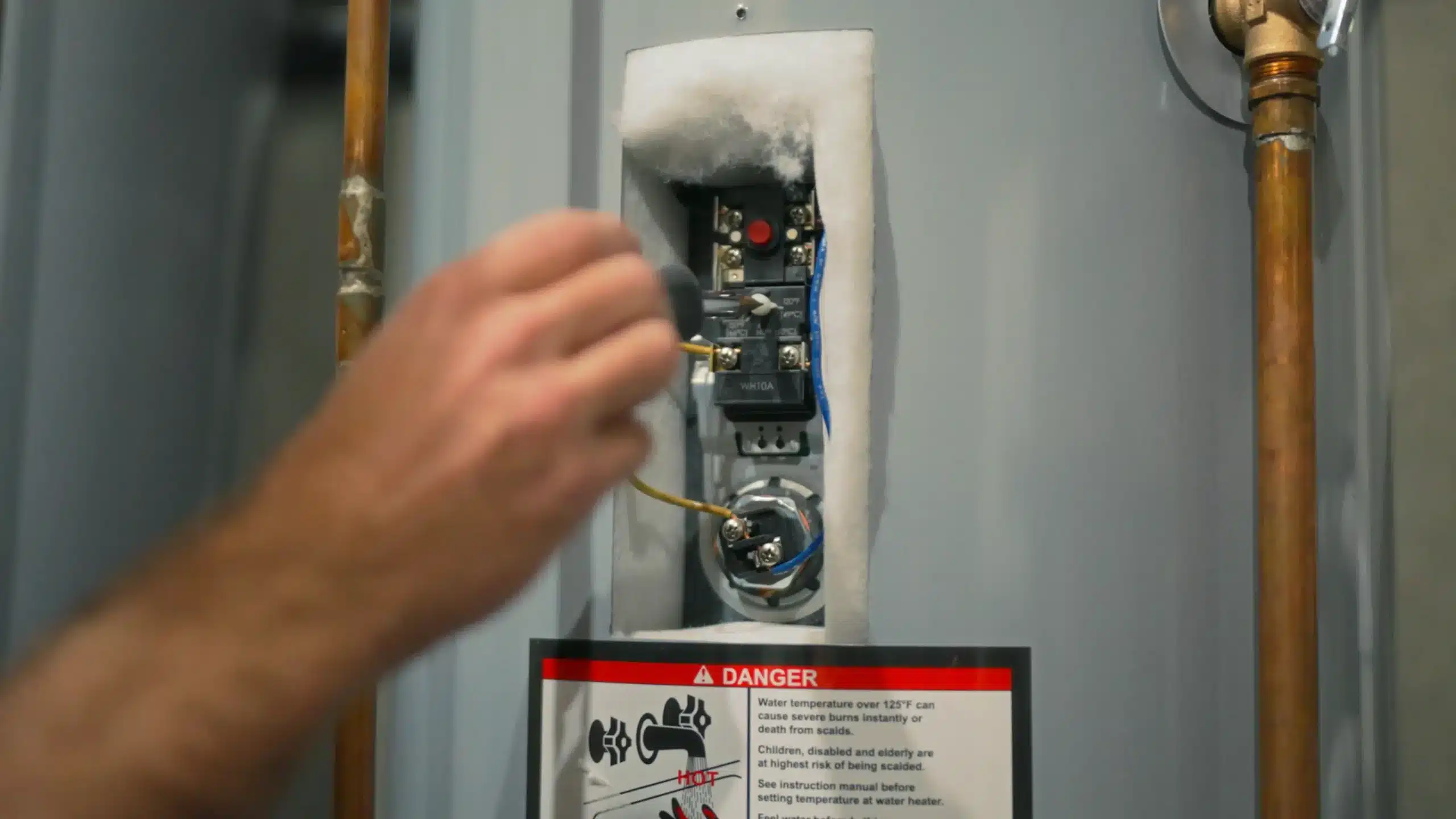
- Tip: The ideal pressure range of the water heater tank is 50 – 100 pounds per square inch (psi), and thermostats should be set at 120℉.
- Tip: The ideal pressure range of the water heater tank is 50 – 100 pounds per square inch (psi), and thermostats should be set at 120℉.
Need Help With Your Water Heater?
Smedley Plumbing offers everything from water heater installation to repair, replacement, and maintenance to keep your system running smoothly. Whether you’re upgrading to a new model, need a quick fix, or want to ensure your heater stays efficient year-round, our experts are here to help. Call us today to get started with reliable service you can count on!